Designing for Revenue Integrity at Scale
Helping Charge Master Analysts find important changes, understand their impact, and act safely with AI.
Hospitals use a Charge Master to manage the codes and prices behind their services. Those prices never stop changing.
I led the design of an AI experience that puts expert judgment where it matters most.
- Role
- Lead Designer
- Team
- 2 Designers · 2 PMs · 19 Developers · 4 Data Scientists
- Year
- 2025
- Impact
38% faster decisions
33% fewer verification checks
35% lower analyst touch time
88% appropriate AI reliance
Watch the quick overview
A quick overview of how an automation brief became a way to share work between AI and experts.
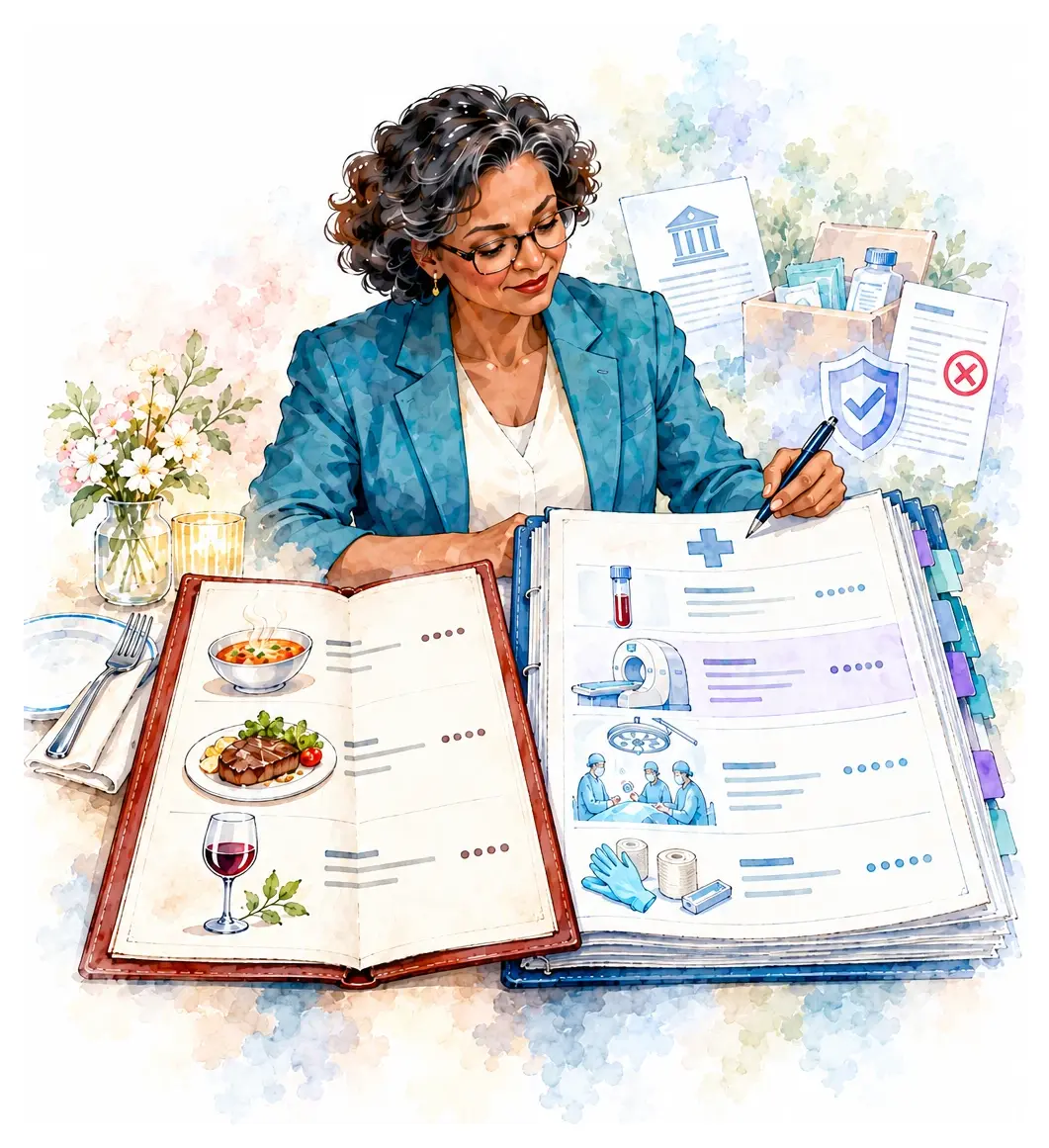
Think of the Charge Master as a hospital's master menu
Every test, drug, and procedure has a code and a price. Unlike a restaurant menu, this one never stops changing.
Updating the menu wasn't the hardest part. Knowing what needed to change was.
Meet the person behind every change
Charge Master Analysts keep this system accurate.
But they do much more than update records.
They watch for changes, figure out what they mean, find the right experts, understand the money involved, get approvals, and make sure the final update is safe.
This is not a data-entry job. It is a decision-making job.
- Watches
- Regulations · Codes · Costs · Supply issues
- Figures out
- What changed · What it affects · What to do
- Works with
- Coding · Finance · Clinical teams · Revenue Integrity
It looked like a data-entry problem. It wasn't.
Analysts spent more time finding, understanding, and coordinating than updating.
Important changes were hard to find
They often started outside hospital systems, so analysts checked many sources by hand.
The problem was noticing change early enough.
Use the ← → keys, click an edge, or scroll sideways.
Important changes were hard to find
They often started outside hospital systems, so analysts checked many sources by hand.
The problem was noticing change early enough.
BeforeMany sourcesRegulations, vendors, costs, codingAnalystChecks each one by handUnderstanding a change meant chasing people
Every change meant explaining it to one expert after another.
Experts kept rebuilding the same context.
Before automation- 50 min
- to reach a decision
- 22%
- of changes needed rework
BeforeAnalystwith one change- Coding expert
- Pharmacy
- Department leader
Explained again and again.
Every change got almost the same attention
Routine changes got the same detailed review as risky ones.
The most important work did not get enough.
Before automation- 65 min
- of analyst time per change
Before: the same review for everyone- Low riskFull review
- Medium riskFull review
- High riskFull review
Research revealed two kinds of work
The change is already known.
- New regulation
- New code
- Vendor price increase
The analyst has to discover the problem.
- Rising costs
- Supply disruption
- Margin pressure
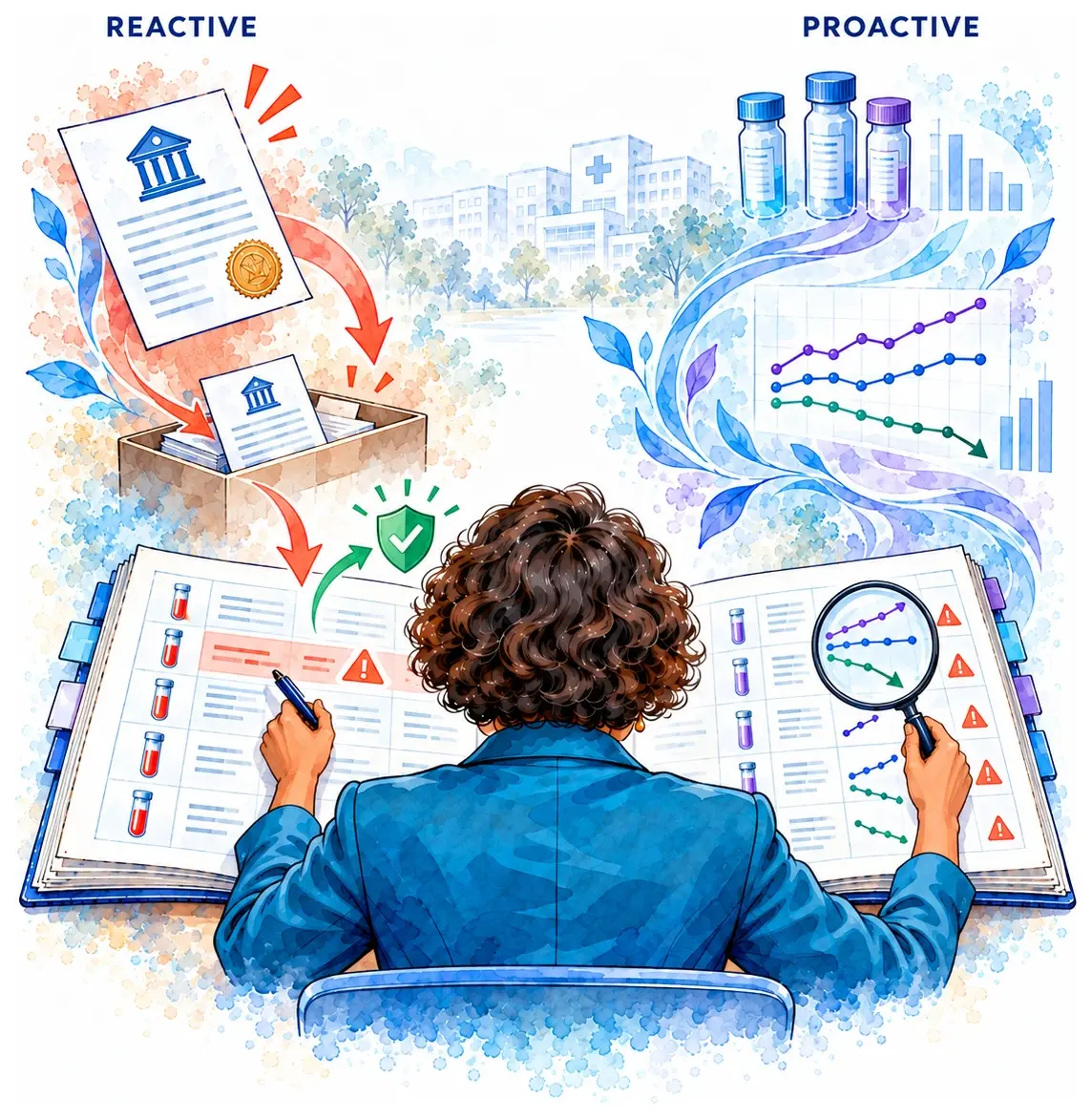
Different problems. Same decision pattern.
- DetectWhat changed?
- UnderstandDoes it matter?
- Assess impactWhat is affected?
- DecideWhat should we do?
- ActWho needs to help?
The real bottleneck was not updating data. It was turning change into a safe decision.
Research changed the question
“How might we automate Charge Master maintenance?”
“How might we help analysts find meaningful changes, understand their impact, and safely share work with AI?”
Four things needed to improve
- Goal 1
Find the right changes
Help analysts notice meaningful changes without manually watching everything.
- Goal 2
Understand them faster
Bring the change, evidence, affected charges, and impact into one place.
- Goal 3
Reduce unnecessary back-and-forth
Give the right people the context they need before asking them to review.
- Goal 4
Use expert attention wisely
Let AI handle more routine work while people focus on uncertainty, risk, and important decisions.
Keep important decisions accountable
Evidence, approvals, and the final commit must stay clear and traceable.
AI does the busywork. Experts keep the judgment.
Not every change needs the same amount of human attention.
We called this variable delegation: the amount of work AI does changes with the risk of the decision.
- the evidence is clear,
- the situation is familiar,
- and the risk is low.
- the situation is unclear,
- the change is unusual,
- or a mistake could have a large impact.
Eight changes that put the idea to work
The first five answer the problems above. The last three make AI work usable and safe.
Help analysts notice what matters
AI watches the sources and flags possible changes.
- 01AI monitors all sources
- 02AI finds the signal
- 03Analyst decides
Bring the evidence together
Before asking an expert for help, AI answers five questions:
- 01What changed?
- 02Does it matter?
- 03What is affected?
- 04What should we do?
- 05Who needs to help?
Send the right context to the right person
Each reviewer sees the same change in their own terms.
One change. Different views. Shared evidence.
Match attention to risk
Routine changes move faster. Risky ones get more human attention.
Experts don't disappear. Their time moves to where it matters most.
- Low riskQuick check
- Medium riskStandard review
- High riskDeep review with approvals
Keep important decisions human
AI can prepare the update. People approve it before it is committed.
AI prepares the decision. A person owns the decision.
Explore freely. Commit carefully.
Analysts can explore options with AI as freely as they like. Once an action has consequences, approvals are required.
The gate is built into the product, not left to process.
Show answers as they arrive
AI answers stream in, so analysts start reading before the full answer is ready.
Waiting feels shorter when something is already on screen.
Give AI a memory with limits
Analysts can see what the AI remembers, and correct it.
- What will it remember?
- For how long?
- Where does it apply?
- Can I correct it?
When AI is wrong, the fix is visible, not silent.
The same idea works differently depending on the problem
The change is known. AI can do more of the preparation.
- Triages the batch
- Prepares the update
- Gathers reviews
- Handles exceptions
- Approves
- Commits
AI prepares the action.
The problem is still emerging. AI helps explore it.
- Finds the signal
- Gathers evidence
- Explores options
- Weighs the trade-offs
- Makes the call
- Commits
AI prepares the decision material.
Did we achieve the goals?
Find the right changes
Less noise. Fewer misses.
Understand them faster
Faster, and just as sure.
Reduce back-and-forth
Less repeating the same work.
Use expert attention wisely
Less manual work. Better judgment.
Keep important decisions accountable
AI explains its work. People own the outcome.
Room for the same team to do more
A modeled estimate, not a measured result.
What actually changed in the work?
- 1
Detect
Before: Watch many sourcesAfter: AI surfaces credible signals
- 2
Understand
Before: Rebuild the story by handAfter: AI prepares the evidence
- 3
Assess
Before: Connect charges by handAfter: Impact is ready for review
- 4
Collaborate
Before: Explain the same change againAfter: Context travels with the change
- 5
Decide
Before: Build the recommendation from scratchAfter: AI prepares options, the analyst judges
- 6
Act
Before: Prepare and commit everythingAfter: AI prepares, a person approves
Before, experts spent their time assembling the decision.
After, they spent more of their time making the decision.
The goal was never maximum automation
The project started with a question about automating Charge Master maintenance. It ended with a model for deciding when automation helps.
AI does more when the situation is clear and predictable. Experts take more control when it is unclear or important.
The result was not less human judgment. It was better use of human judgment.
What comes next
- 01
Adaptive delegation
Let the system recommend the right level of AI involvement based on risk, uncertainty, and past performance.
- 02
Organizational memory
Reuse prior decisions, policies, and corrections when similar changes happen again.
- 03
Close the loop
Watch what happens after a change is committed and use those outcomes to improve future recommendations.
Detect, Understand, Assess, Decide, Act, Learn